
Why Gather.
Most people are not stopped by skill.
Most people who want to cook something new aren't stopped by laziness, and they aren't really stopped by skill. They're stopped by a quieter assumption: that the dish belongs in somebody else's kitchen.
You read a Thai recipe and you don't picture your own grocery store. You picture a shop across town you've never walked into, or a shelf of things you wouldn't know how to choose between. So you order takeout instead, from a place that already knows where to buy everything. For three times what it would have cost to make.
We built Gather because most of that dissolves the moment somebody tells you what's actually required. The barrier isn't skill. It's not knowing, and then not wanting to gamble an evening and a grocery bill to find out.
Bringing food to a table is an act of love. That is why Gather exists, and it is the one part of this we are never going to change.
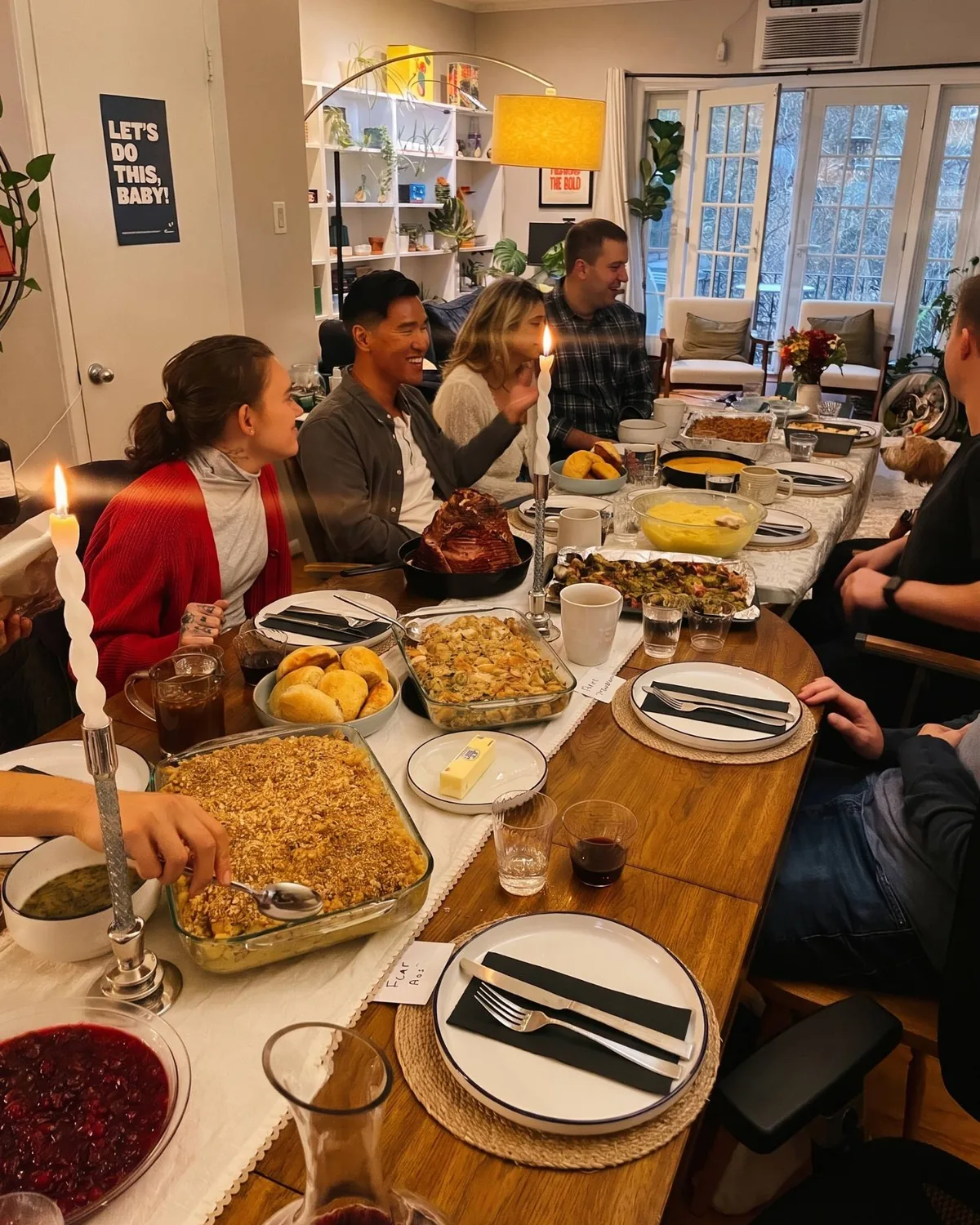
We don't ship the chicken.
You already had everything: the chicken, the onions, the pan, the Tuesday. What you didn't have was the flavor your store can't sell you, and the know-how to use it.
So that is all we ship: the blends, the sauces, the hard-to-find ingredients, measured per recipe, with the list and the steps. Your store's chicken is fresher than our box. You buy the rest there, and you cook it.
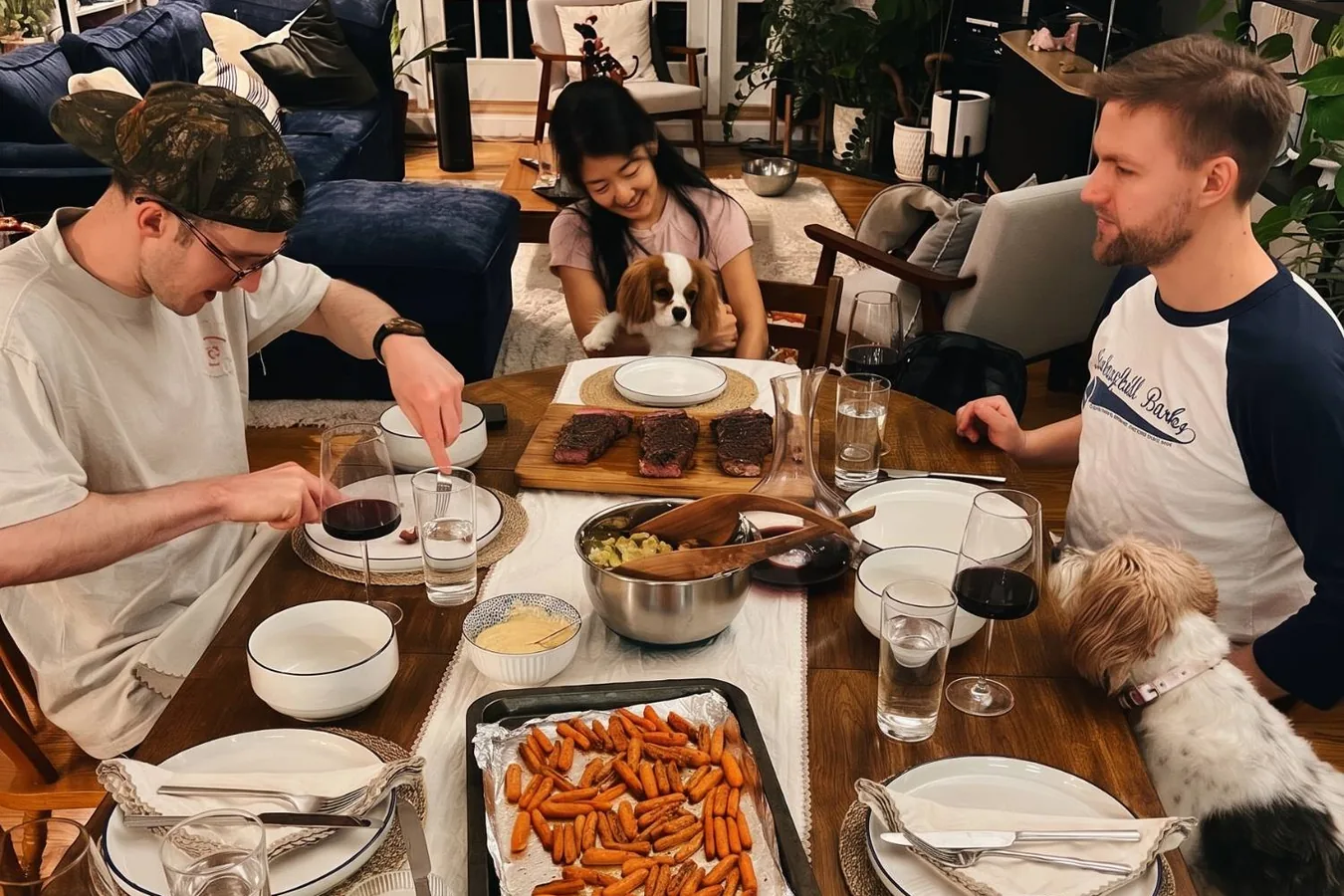
The Indiana table.
Some of the best hours of my life were spent at a dinner table in rural Indiana.
My dad usually cooked, sometimes my mom. As my sister and I got older, we cooked too. Carrying the food out was the thing that pulled everyone else into the room, and then nobody left. We talked about the day, about ideas we'd had, about nothing in particular. The plates were empty long before we were.
Then I left Indiana, and I found flavors that corn and potatoes had never prepared me for. Smoked paprika. Vietnamese cinnamon. The first time a Sichuan peppercorn buzzed my tongue numb, I put my chopsticks down to ask what that was (mala, or the numbing half of it). None of it replaced anything. It just gave the table more to talk about.
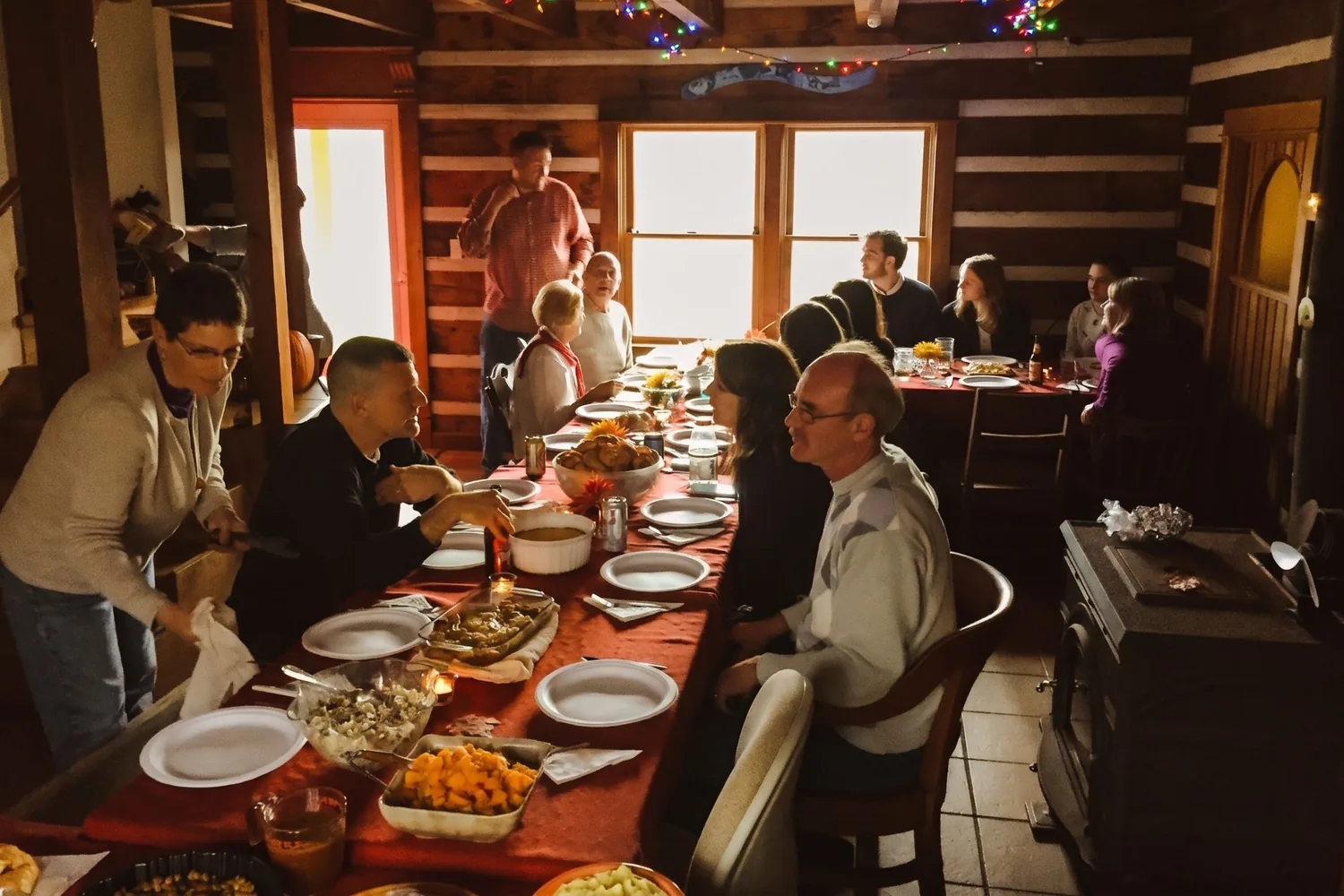
What is underneath.
Real ingredients
No preservatives, no artificial colors. We buy blends for flavor rather than for price, portion them to the dish, and send them at full strength.
Tested until a mediocre cook nails it the first time.
Every recipe is cooked on a regular stove, in a regular pan, before it goes anywhere near a packet. A dish that lands at good enough goes back, because good enough is what you'd have made without us.
Functional beauty
Packets labeled for the dish, nothing more. What you open is what you need.
You're treated as a capable adult
We tell you exactly what to pick up and what to look for. Nothing quietly guilt-trips you from the back of the fridge.
Where we're going.
We are early. There's a lot we haven't figured out: packaging, procurement, support, how to tell anybody about any of it. We'd rather say what we're aiming at and be held to it than wait until it's all true.
None of this has a date on it. Where we aren't there yet, we've said what you get today.
1. A table you can actually get to
- Today
- Nothing yet. This is the piece we want most and have least of.
- Next
- Tell us what you want to cook. When enough people ask for the same dish, we go build it.
- Later
- Cooking together in real time. Online first, then in person, Philadelphia first because that's where we are.
2. Spices worth building a dish around
- Today
- Bought in small batches and chosen for flavor rather than for price. Four paprikas and three oreganos on the shelf, because they are not the same spice and the wrong one quietly flattens a dish. Calabrian chili flakes where supermarket red pepper flakes would just be hot. No preservatives, no artificial colors.
- Next
- Ground closer to the day it ships. Ground spice starts losing what you paid for almost immediately, and we'd rather own that clock than pretend it isn't running.
3. Teaching that keeps up with you
- Today
- Walkthroughs for the tricky steps, and instructions that end in what to look for rather than a number on a timer.
- Next
- Video on the dishes where watching beats reading.
- Later
- Something you can talk to and interact with while your hands are busy. A companion that knows when it's done, and what changes if you use thighs instead of breasts.
4. Room for more people
- Today
- Hundreds of recipes across more than 30 cuisines.
- Next
- More recipes built around specific diets, so "I can't eat that" stops ending the conversation.
Everyone deserves a seat at a gathered table. That's the whole plan. The rest is logistics.

Harrison
Try the house box